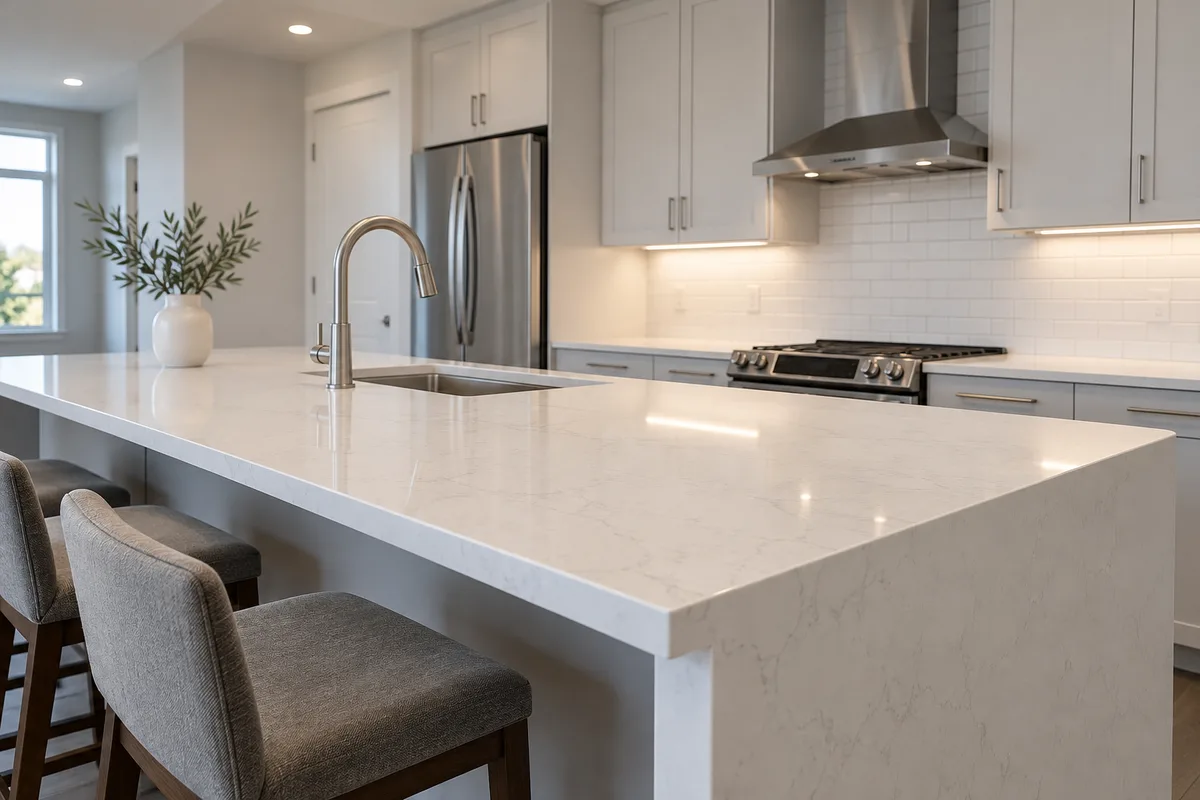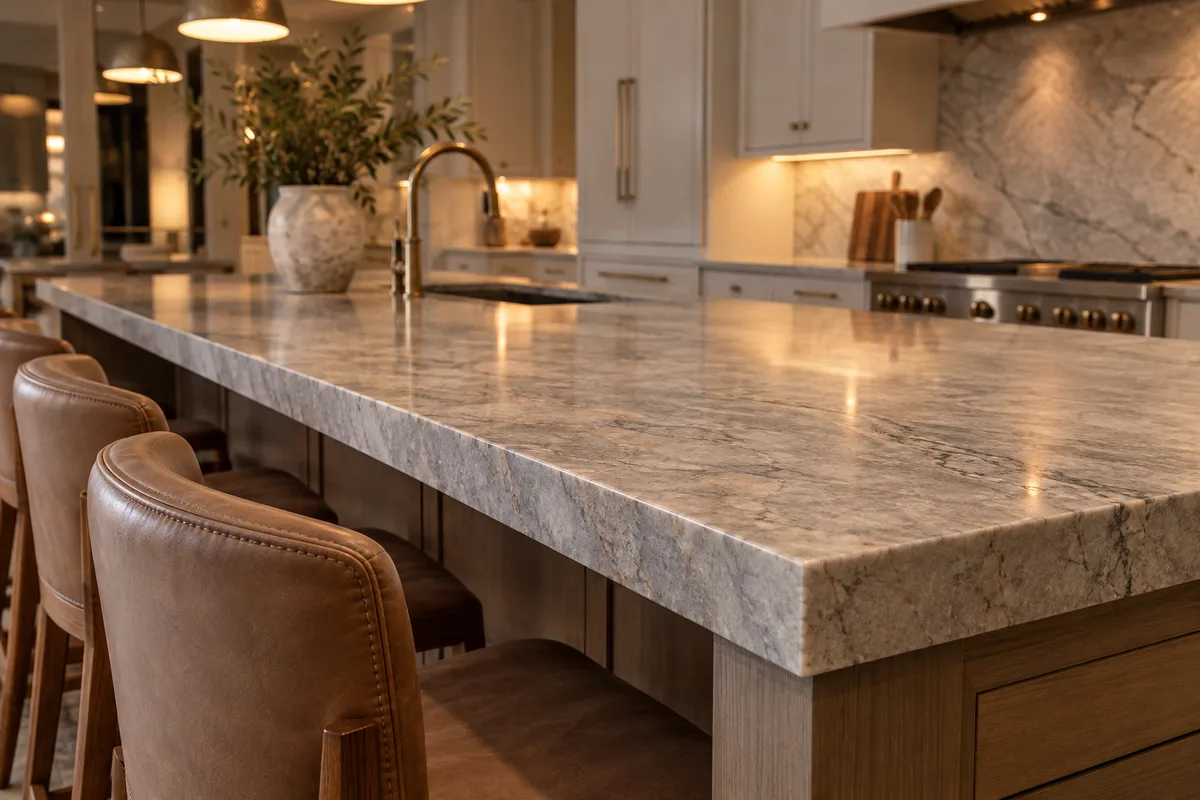
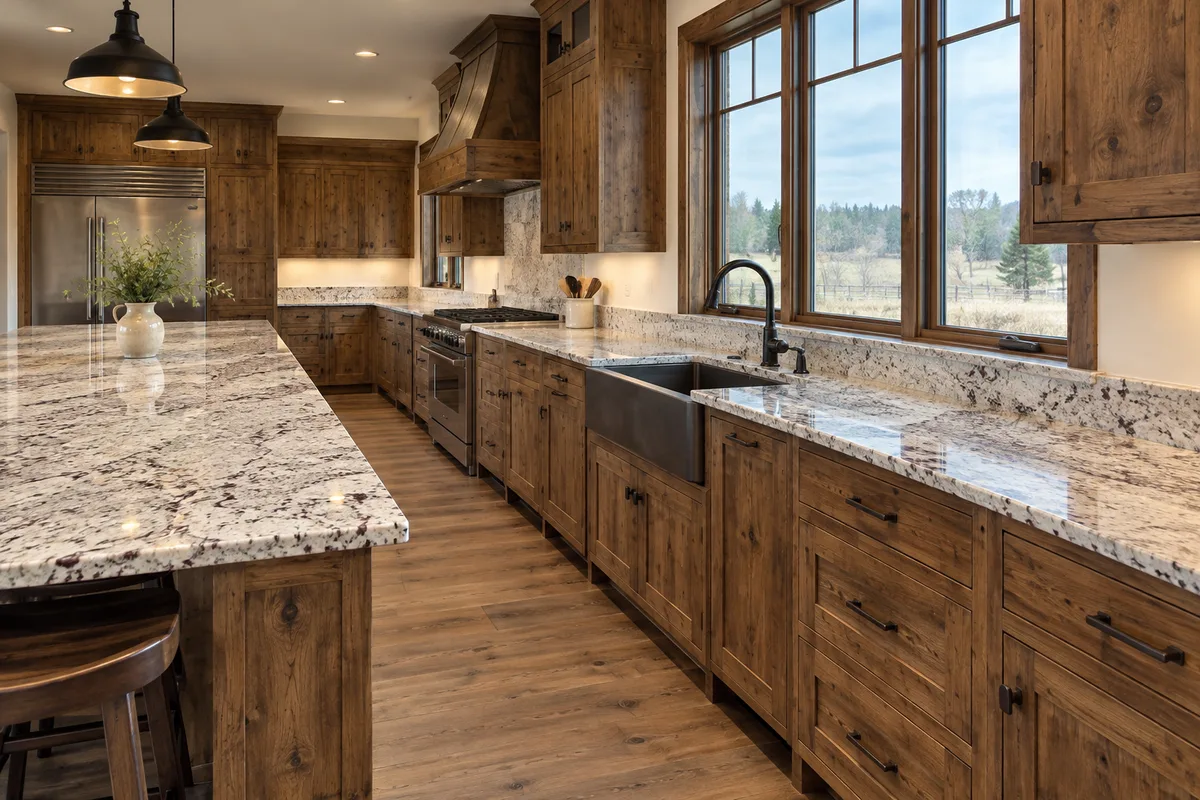
Tom, Horsetown USA ranch home, Norco
Granite Countertop Installation
- Material
- Colonial White granite
- Size
- 45 sq ft ranch kitchen
- Est. investment
- $3,600 to $4,600
- Est. duration
- 1 to 2 days
Long ranch kitchen with two corners and a 1980s laminate top
Riverside Custom Countertops provides seamless countertop joining & seam matching in Riverside, joining stone and quartz with tight, color-matched seams, planned on the slab layout so the veining carries across and the joint lands where it is least noticed.
Seam quality is decided at the layout stage, not on install day. Where the joint sits, how the two pieces were cut from the slab and whether the pattern lines up matter far more than the glue. Done well, a seam reads as a thin line you have to look for, and done badly it stares at you from across the room.
No stone seam is truly invisible, and we say so up front. What we promise is a flat, tight joint in the right spot, with the color and movement of the stone matched across it. We work this way in Riverside, Norco, Corona and Woodcrest, from single-seam L-shaped kitchens to long runs that need two joints.
What you can hold us to
Tom, Horsetown USA ranch home, Norco
Long ranch kitchen with two corners and a 1980s laminate top
Investment and duration figures are estimates. Your written quote sets the final price and schedule.
Seams go where the stone is strongest and the eye is least likely to land. Good placement follows a few firm rules.
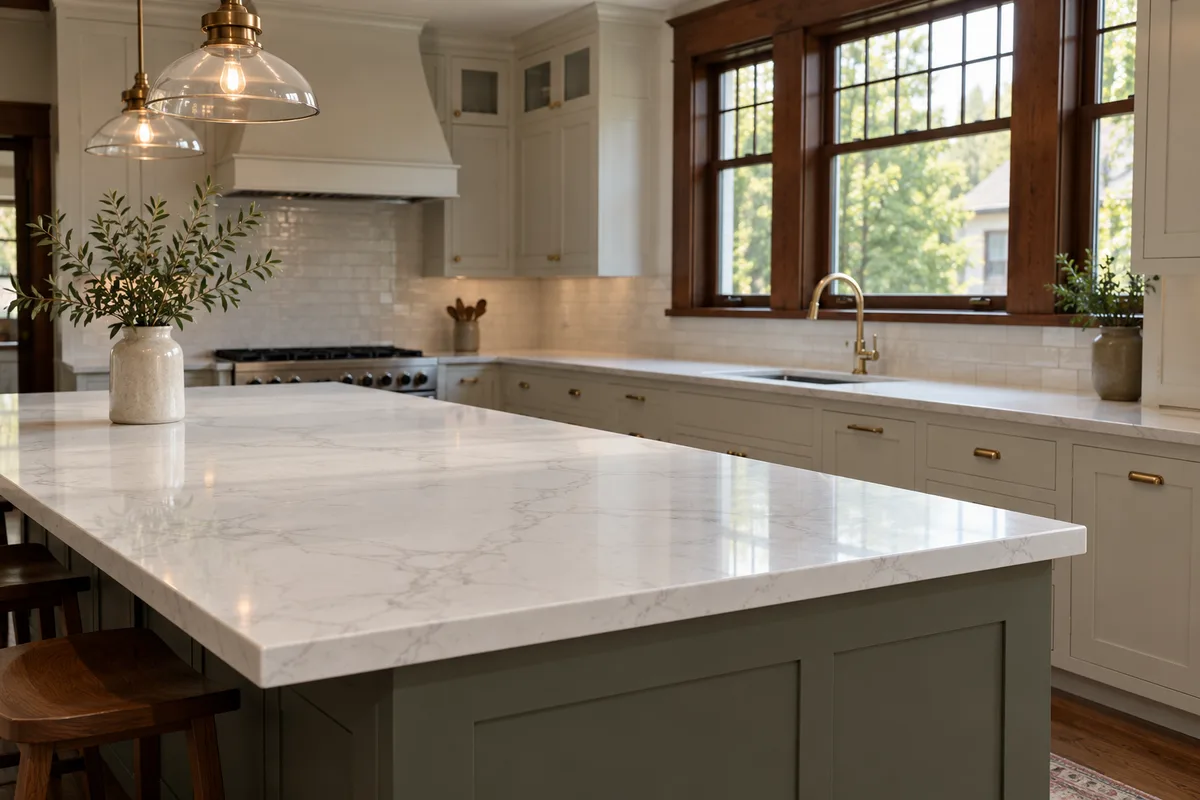
You need a seam whenever a run is longer than the slab you are cutting from or when an L-shape turns a corner. Slabs top out at roughly 120 to 130 in. in length, and most large kitchens exceed that along at least one wall. Islands can often be cut from one piece, which is why they are the usual place to avoid a seam.
Sometimes we can save a seam by choosing a longer slab or a jumbo size, though jumbo slabs cost more and are harder to carry up a narrow side yard. We compare both options for you and show the number each way.
Seaming in Riverside is estimated at roughly $20 to $60 per linear foot of joint, and the stone, the pattern and the layout effort move the price. Plain stone with soft speckle is easier to match than a bold vein, so a simple granite seam sits at the low end.
A dramatic marble or quartzite that has to be book-matched across a joint needs extra slab and layout time, which shows up as its own line on the quote.
Tinted epoxy, vacuum setter and flush finishing on a standard seam
Inside corner joint planned over a cabinet partition
Layout to carry the veins across the joint, extra slab yield checked
Two mirrored slab halves cut and joined for a symmetrical pattern
45 degree joint where the top turns down the side panel
Opened or lipped joint cleaned, re-leveled and refilled
Investment and duration figures are estimates. Your written quote sets the final price and schedule.
These numbers are estimates, and your quote comes after we see the layout. A longer kitchen can need extra seams, and each one adds to the total, so a good layout also saves money.
An extra slab bought only to avoid a seam is estimated to cost far more than the seam itself, which is why we run both versions on paper before you choose.
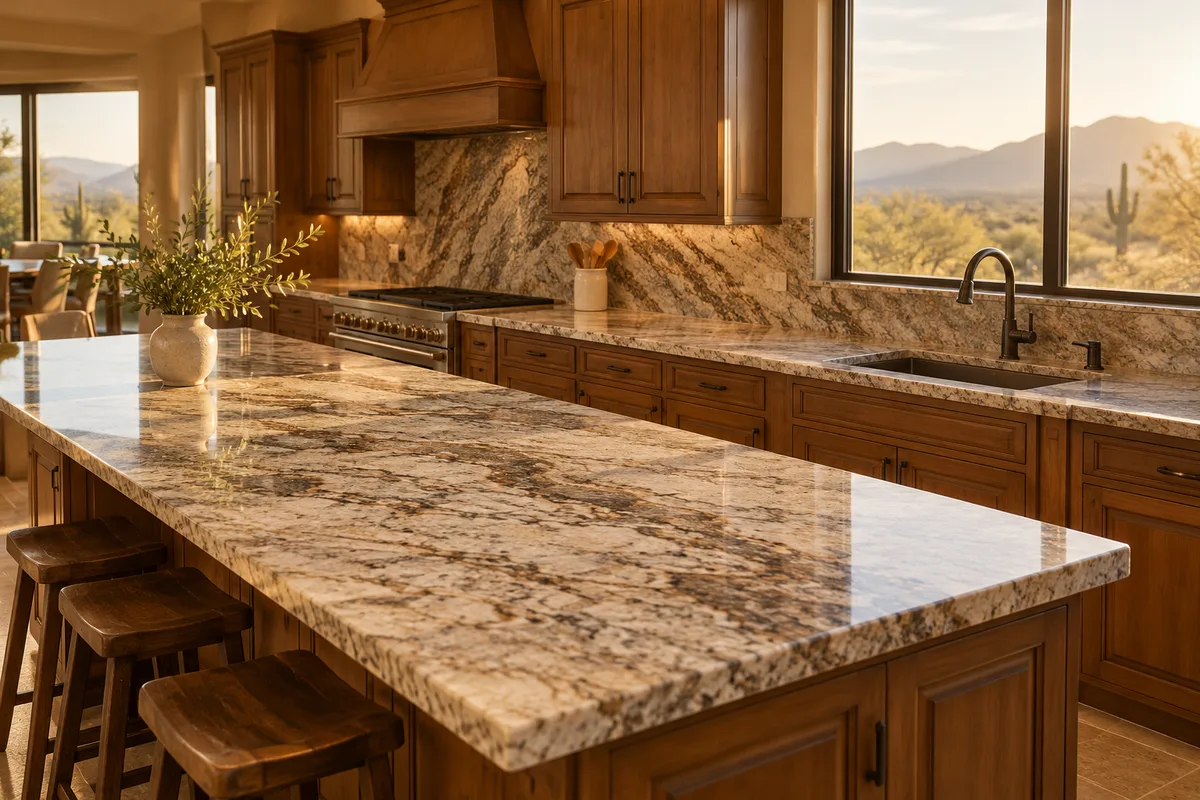
Matching a pattern means cutting both pieces from the same slab in the order the stone was formed. We photograph the slab, lay the template over the image and slide the pieces until the veins meet. On a consistent stone such as speckled granite, the joint nearly disappears.
Strong marble or quartzite veining is harder, since a vein that crosses the joint at an angle shows as a kink. In that case we shift the seam location or choose where the vein ends, and we show you the layout so you approve it before any cut is made.
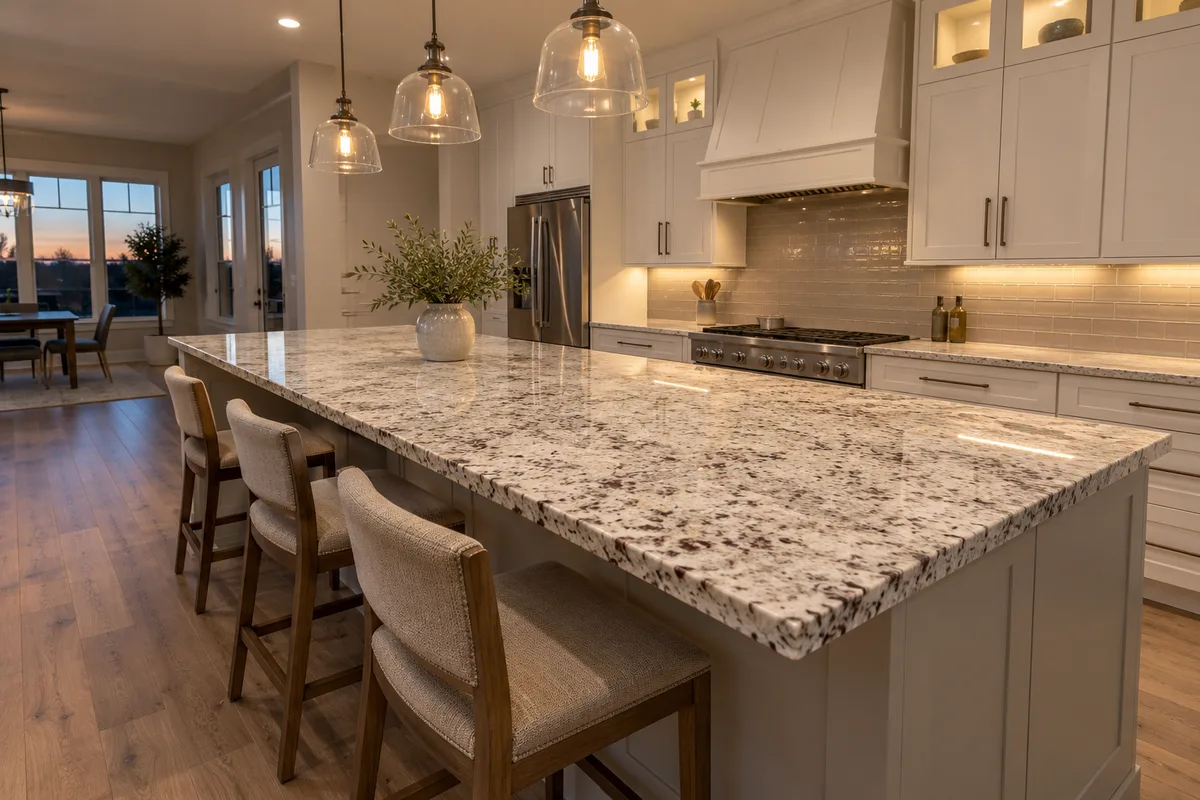
Quartz seams are the easiest to hide when the pattern is uniform, because the color is consistent across the slab. Quartz with large, directional veining behaves more like marble, and the pattern has to line up across the joint.
Dark solid colors show every tiny gap, so a black or deep blue seam takes extra care and a very tight joint. Light, flecked stones forgive more. We tell you which kind you are looking at when you pick the slab.
Corners and mitered edges are seams too, and they are where a seam is most visible. A mitered waterfall joins two pieces at 45 degrees so the veining wraps around the corner, and the joint takes real skill to hide. Our waterfall edge countertops use the same vacuum setter and tinted epoxy, with extra time spent on the corner.
An inside corner in an L-shaped kitchen is usually a simple butt joint, and one of the easiest to make clean.
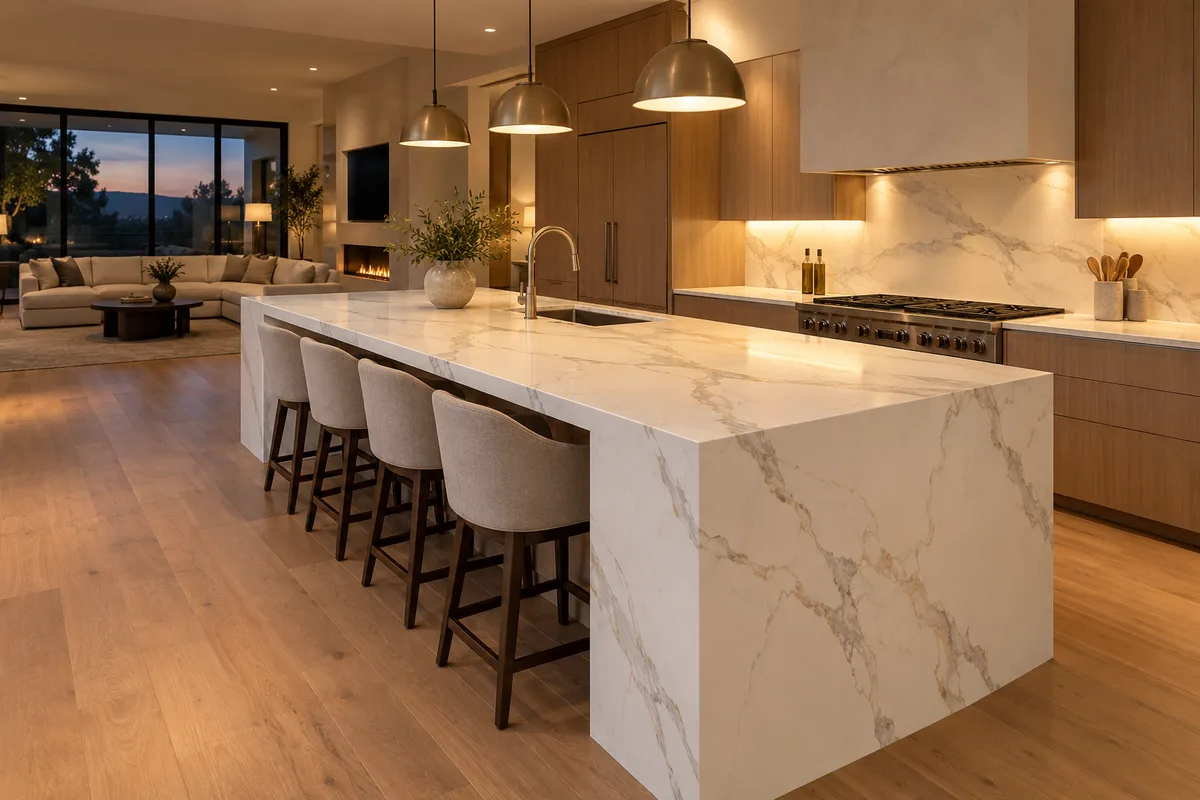
A seam needs no special care beyond what the stone needs, and the epoxy is as hard as the stone. Keep sealer on natural stone and clean with a pH-neutral cleaner, so the joint does not stain and darken.
If a joint ever lifts, opens or feels rough, tell us right away, since water getting under a seam can swell the cabinet below. Our countertop repair service re-levels and refills joints, and it is covered when the work was ours.
Look at the seam layout drawing and ask where each joint lands against your sink, range and windows. Confirm the stone you picked is the stone on the layout, since two slabs of the same color can differ in tone.
On install day, walk the finished seam with a flashlight held low and a fingertip run across it. A good joint feels flat and shows no gap, and if it does not, we fix it before we pack up.
The crew that lays out your slab also cuts, sets and finishes the joint, so nobody has to guess what was planned. A seam we make is covered by our 1-year workmanship warranty on seams, fit and sink mounting.
We work across Norco, Corona and Woodcrest, where long ranch kitchens often need a well-placed joint.
A good seam is a thin, flat line you have to look for, because no stone seam is truly invisible.
Seams belong over a cabinet partition, clear of the sink and cooktop cutouts, and out of the view from the door.
Seaming is estimated at roughly $20 to $60 per linear foot, and the quote after the layout review sets the final number.
Sometimes, with a longer or jumbo slab, though that can cost more than the seam, so we price both.
It is two mirrored slab halves joined so the pattern forms a symmetrical design across the joint.
We aim for a hairline joint under 1/16 in., filled with tinted epoxy and scraped flush.
Yes, solid dark colors show a joint more readily, so they need a very tight seam.
Yes, an opened or lipped seam can be cleaned, re-leveled and refilled.
Request a free estimate and we will look at your kitchen, mark proposed seam locations and show you the layout before any stone is cut.

Start to finish
We template the kitchen and find where the runs exceed a slab.
We lay out seams over cabinet partitions and match the veining.
Mating edges are cut square and polished in our Riverside shop.
A vacuum setter levels the joint, and we knife and polish it flush.
Where we work
Call us or send the form, and we will book a site visit and a laser template.
Calls only, we do not receive text messages.