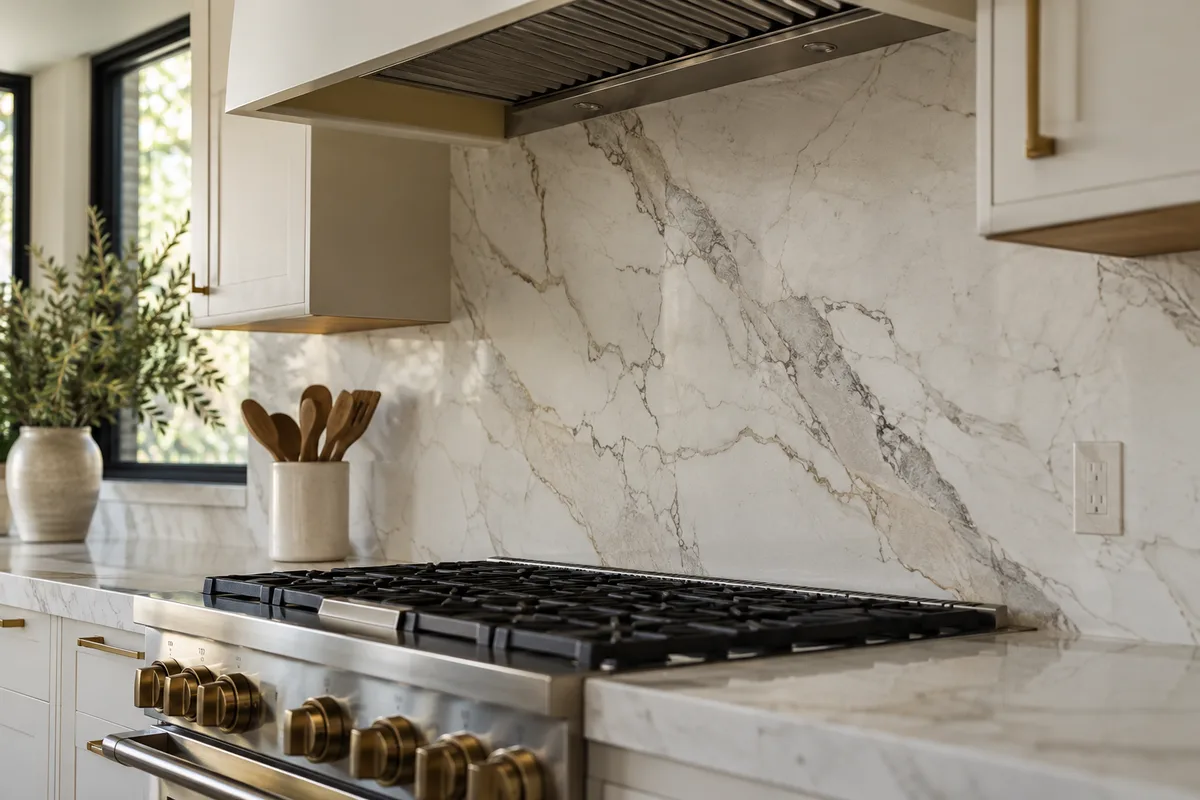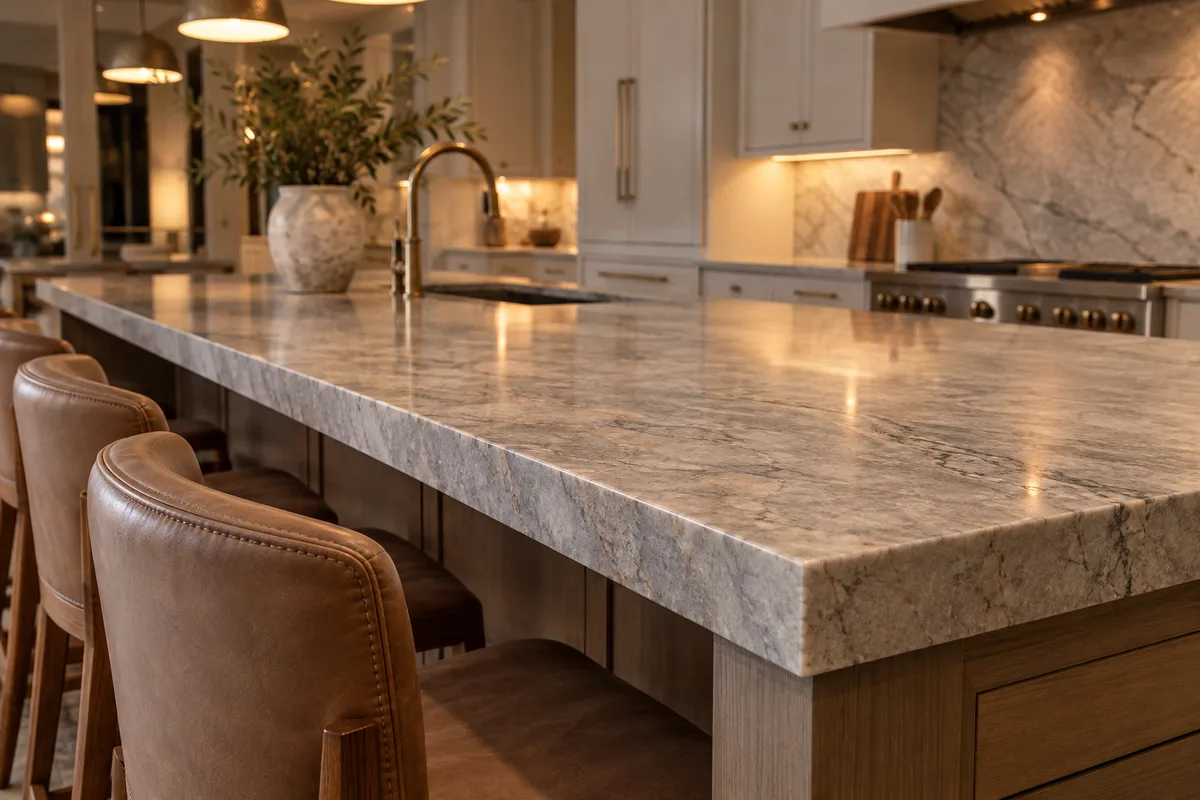
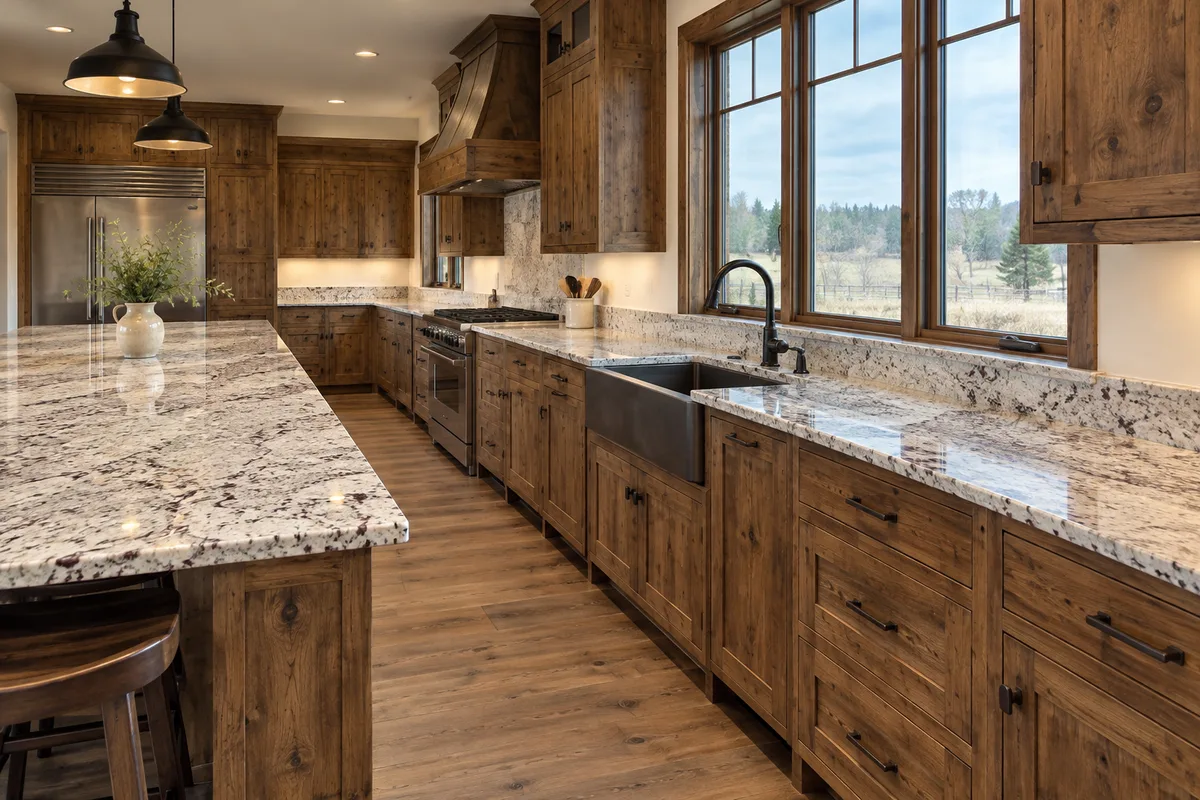
Tom, Horsetown USA ranch home, Norco
Granite Countertop Installation
- Material
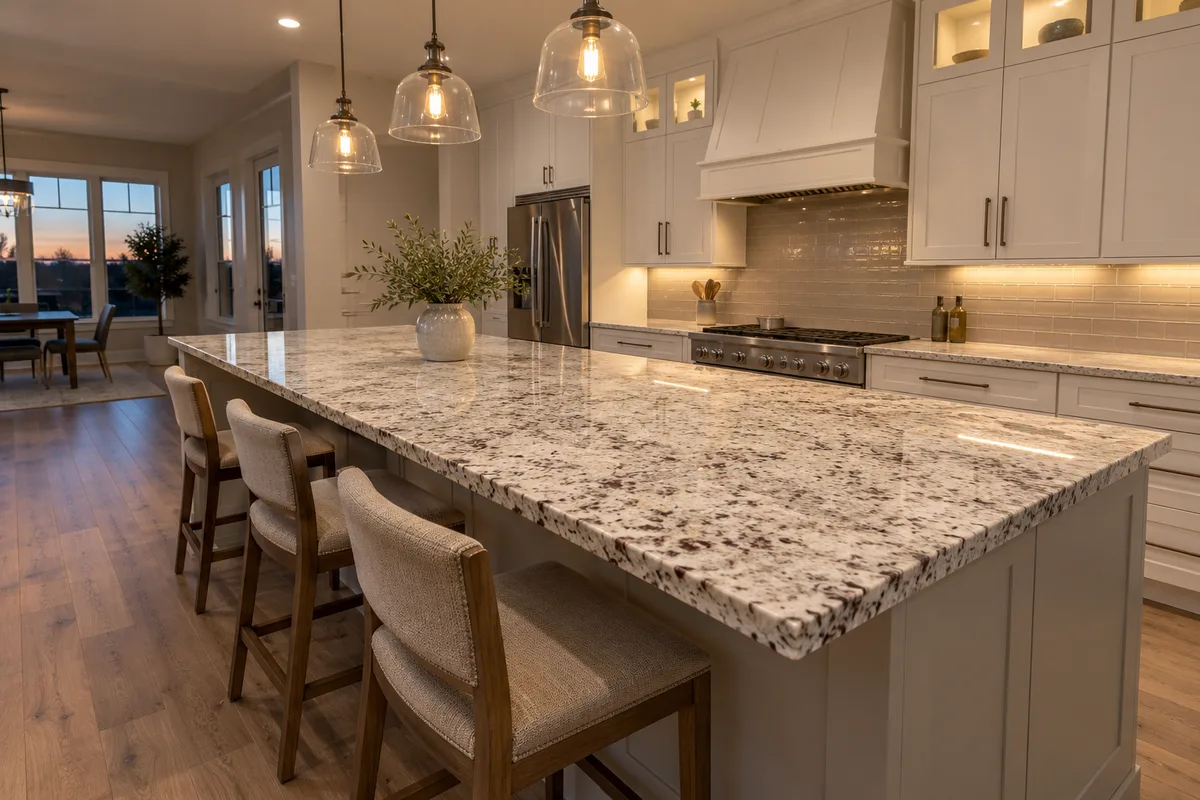
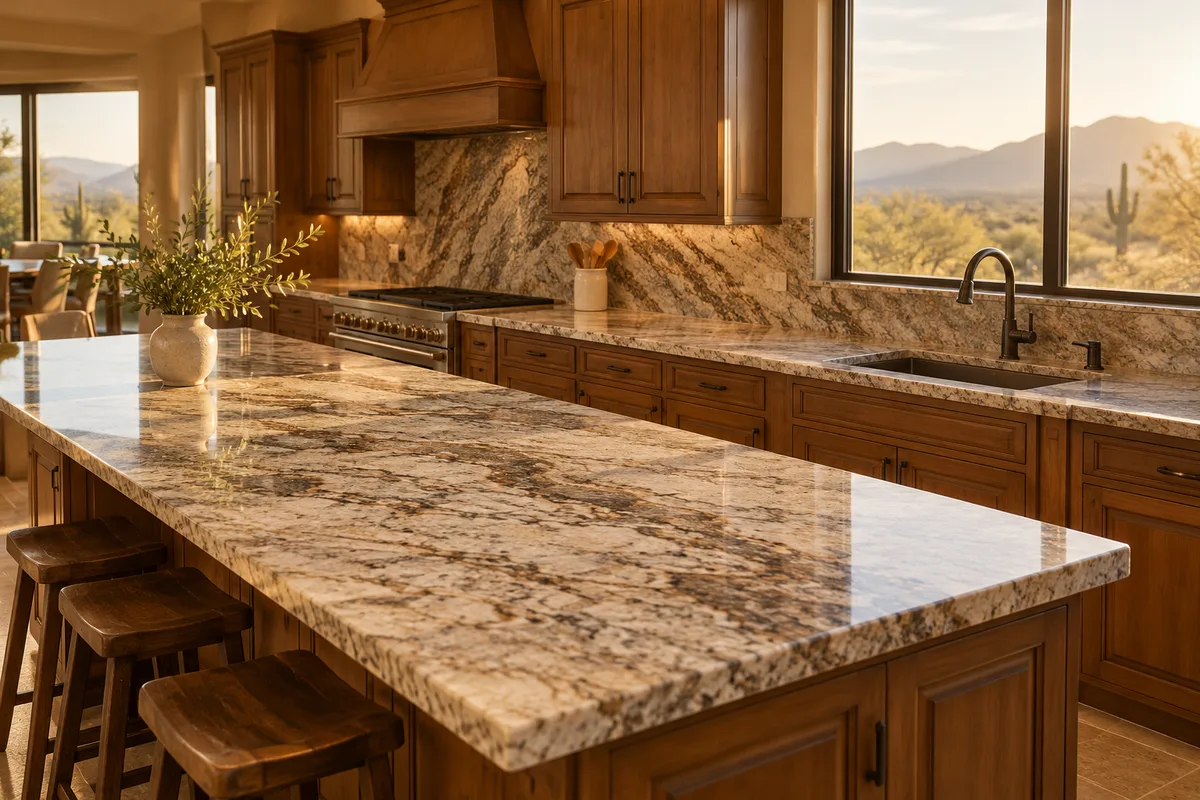
- Colonial White granite
- Size
- 45 sq ft ranch kitchen
- Est. investment
- $3,600 to $4,600
- Est. duration
- 1 to 2 days
Long ranch kitchen with two corners and a 1980s laminate top
Riverside Custom Countertops offers marble floor resurfacing & refinishing in Riverside, where it grinds, hones, polishes and seals dull, etched or scratched marble, travertine and limestone floors, so the original stone is renewed instead of torn out.
Marble is stone all the way through, so the color and veining sit in the whole thickness and not only on top. Taking off a hair-thin layer with diamond abrasives removes etch rings, foot-traffic haze and light scratches, and what is left underneath is fresh stone that can be honed or polished to the finish you want.
We work on marble, travertine and limestone floors in entries, bathrooms, kitchens and living rooms around Riverside, Norco, Corona and Eastvale. Before any quote, we check how thick the stone is, how flat the tiles sit and what caused the damage, because those three facts decide how much work the floor needs.
What you can hold us to
Tom, Horsetown USA ranch home, Norco
Long ranch kitchen with two corners and a 1980s laminate top
Investment and duration figures are estimates. Your written quote sets the final price and schedule.
Restoration removes the damage, while a wax or coating only hides it for a while. Etching is a chemical burn in the surface from acids such as juice, wine or harsh cleaners, and grinding takes that burned layer off instead of painting over it.
That is why we work with diamond pads and water rather than topical products. Waxes and film coatings yellow, peel in walkways and make the next restoration harder, whereas a mechanically refined floor can be maintained with a simple neutral cleaner.
We begin by judging the damage and then choose a starting grit that matches it. Deep scratches and uneven tile edges need a coarse pass to flatten the surface, and a floor that only looks tired can start with a fine pad.
Every pass erases the scratch pattern of the one before it, so the order is never skipped.
| Finish | Look | Underfoot | Suits |
|---|---|---|---|
| Honed | Soft matte, hides etching | Less slick | Bathrooms, busy entries |
| Polished | Glossy, reflects light | Slicker when wet | Formal foyers, dry rooms |
Honed floors forgive daily wear better, and polished floors show every new etch faster. Pick honed if the floor sees kids, pets or wet feet.
Restoring a marble floor is an estimated $3 to $12 per square foot, depending on how deep the damage runs. A floor that only needs a polish sits at the low end, and a floor with lippage and deep scratches sits at the high end.
That is generally far less than ripping out stone, hauling it away and setting new tile, and it keeps the original floor in a home where the material is hard to match.
Fine-grit polish, then penetrating sealer
Several grit passes to a honed or polished finish
Flatten the whole floor before honing and polishing
Color-matched fill, polished level with the stone
Rake out old grout and refill before final passes
Penetrating sealer after a deep clean
Investment and duration figures are estimates. Your written quote sets the final price and schedule.
Please read these prices as estimates. The written quote we give you after the assessment fixes the real figure, and it names the level of work your floor needs.
Square footage matters, but so do access, stairs, furniture to move and how many separate rooms are involved. We walk the floor first so the quote has no hidden steps in it.
A floor with a failing subfloor will crack again no matter how well the surface is finished. If a tile split because the slab beneath it moved or flexed, the cause has to be corrected first, and we tell you so before quoting the cosmetic work.
There is also a limit on how many times stone can be ground. A floor that has already been refinished several times may not have enough thickness left for another pass. We measure and say so, and we do not push a grind that would thin the stone too far. Where the damage is deeper, countertop repair methods for chips and cracks carry over to floor tiles.
Sealing is the last step and it is what keeps the new finish looking new. A penetrating sealer sinks into the stone and slows how fast oil and water get in, without leaving a film to scuff or peel.
Sealer reduces staining but does not stop etching, because etching is a reaction with acids at the surface. That is why we send you home with a plain care routine: a neutral pH cleaner, mats at the doors, and wiping up juice and wine fast. The same upkeep applies to marble counters, and our countertop sealing and polishing service follows the same method.
Marble, travertine and limestone all respond to the same grind and polish process, with small differences in how they take a finish. Travertine often needs its natural holes filled before polishing, and limestone is softer, so it is worked with a lighter hand.
If you are weighing a new stone surface instead, our marble countertop installation shows how the same material behaves in a kitchen or bath, and countertop refinishing and resurfacing covers the counter-side version of this work.
Restoration is messier than a mop but tidier than a demolition. Grinding is done wet, so dust stays down, and the slurry is picked up as we go rather than left to dry on your trim.
You will need to clear furniture from the rooms being done, and the room is off limits until the floor has dried and the sealer has cured. Most households use the space again within a day or so of the final seal, and we give you a clear return time before we start.
We restore stone floors for homes up to roughly 35 miles from the Riverside shop, with frequent visits to Norco, Corona and Eastvale. Entries, primary baths and long hallways are the rooms we see most.
If a floor and a counter in the same house are both tired, ask us to look at both, since one visit can cover the assessment for each.
We cut and finish stone every day, so we know how a slab responds to a diamond and to water. The same people who assess your floor also do the work, with no handoff to a subcontractor.
Our work carries a 1-year workmanship warranty. We are also plain about floors that should not be ground, and we would rather decline than thin your stone past the point of return.
Yes, because marble is solid stone, and grinding removes the damaged top layer so fresh stone shows underneath.
In most cases it costs far less, since there is no demolition, disposal or re-tiling, and the original stone stays in place.
It runs an estimated $3 to $12 per square foot depending on damage, and the written quote after assessment sets the final price.
Honed is the better pick for baths and busy entries because it hides etching and grips better, while polished suits formal dry rooms.
No, we finish the stone mechanically with diamond pads and protect it with a penetrating sealer that does not sit on top.
Less than most people expect, because grinding is wet and the slurry is collected, and you can use the room again once the sealer has cured.
No, sealer slows staining but acids still etch the surface, so quick wipe-ups and a neutral cleaner matter.
Almost all can, but a floor ground many times or a tile cracked by a shifting subfloor needs an honest assessment first.
Request a free estimate and describe the damage on your floor, and we will assess it and recommend the right level of restoration, with no obligation.
Start to finish
We check thickness, flatness, chips and grout, then name the level of work.
Chips are filled, grout is renewed and uneven tiles are ground level.
Finer grits take the surface to the finish you picked.
A penetrating sealer goes on, and you get a simple care guide.
Where we work
Call us or send the form, and we will book a site visit and a laser template.
Calls only, we do not receive text messages.